
Elderly woman's hands gently held by younger hands across a warm kitchen table
Caregiver Training Program

You don't have to bring her back.
You can go to her.

Recall is a training program for caregivers navigating the quiet grief of dementia — practical, compassionate, and built for the real moments. Start your first lesson free.

I stopped trying to bring Mom back to my world.

I learned to visit hers.

Woman's hands holding elderly mother's hands across a warm kitchen table

Diane M.

Daughter & Recall Graduate · Chicago

Completed all 6 modules
Scroll to learn

This was written for you — specifically.

Recall isn't a clinical manual or a textbook. It's a conversation between people who understand what you're carrying.

Home Health Aides

Studying between overnight shifts. You need techniques that work at 3am when a resident is frightened and calling for someone who died forty years ago.

Adult Children

Suddenly parenting your own parent. Nobody prepared you for the day your father introduced you to yourself, or for the grief of losing someone who is still here.

Activity Directors

Running memory care programs and needing continuing education credits that actually change how you work — not just check a compliance box.

6
Core modules
2–4 hrs
Total learning time
CEU
Credits available
Free
First lesson always

Questions caregivers actually ask

The things nobody tells you — answered with honesty and without jargon.

A question caregivers ask at 2 a.m.

Why does she keep asking for her mother?

Her mother has been dead for thirty years, but your mother is asking for her right now with the urgency of a child who is genuinely frightened. This is not confusion about facts. This is the brain retrieving the deepest emotional memory it has — the person who meant safety.

When memory dissolves, it doesn't dissolve evenly. The most recent memories go first. What remains, often with startling clarity, are the emotional imprints of childhood. Her mother meant comfort, protection, home. In a moment of anxiety or disorientation, of course her mind reaches for that.

The impulse to correct — "Mom, your mother passed away in 1989" — comes from love. It comes from wanting to be honest, to be real with her. But in that moment, you are asking her brain to process a loss it cannot hold, over and over again. Every correction is a fresh grief.

She isn't confused about facts. She's reaching for the person who meant safety.

Soft morning light through sheer white curtains in a quiet bedroom, creating a warm and safe atmosphere

What she's reaching for is a feeling, not a fact.
A question caregivers ask at 2 a.m.

Should I correct him when he thinks I'm his wife?

This is one of the most disorienting moments caregivers face — and one of the most common. He looks at you, his daughter, and calls you by his wife's name. He might reach for your hand with a tenderness that breaks your heart because it isn't meant for you.

The clinical answer and the human answer are the same: No. You don't correct him. Not because honesty doesn't matter, but because in his reality, his wife is right there. Correcting him means forcing him to re-experience her absence — possibly dozens of times a day.

What Recall teaches instead is the art of the gentle redirect. You can acknowledge the feeling without confirming or denying the identity. "You seem happy right now." "Tell me about her." You enter his world as a visitor, not a corrector.

You are not lying when you choose kindness over correction. You are choosing his peace over your discomfort.

A question caregivers ask at 2 a.m.

Is it okay to lie?

Let's call it something more precise: therapeutic fibbing. The ethics of honesty in dementia care is genuinely complicated, and anyone who gives you a simple answer probably hasn't sat with it long enough.

Here is what we know: when someone with dementia asks "Where is my husband?" and her husband died twelve years ago, the truth — delivered plainly — causes acute grief that she cannot process and cannot remember. Tomorrow she will ask again, and grieve again, and again.

Therapeutic fibbing is not about deceiving someone for your convenience. It's about meeting someone in their emotional reality to reduce suffering. "He just stepped out, he'll be back soon" is not a moral failure. It is a form of care. Recall walks you through when this is appropriate, when it isn't, and how to do it with integrity.

Therapeutic fibbing is not about deceiving someone for your convenience. It's about meeting someone in their emotional reality to reduce suffering.

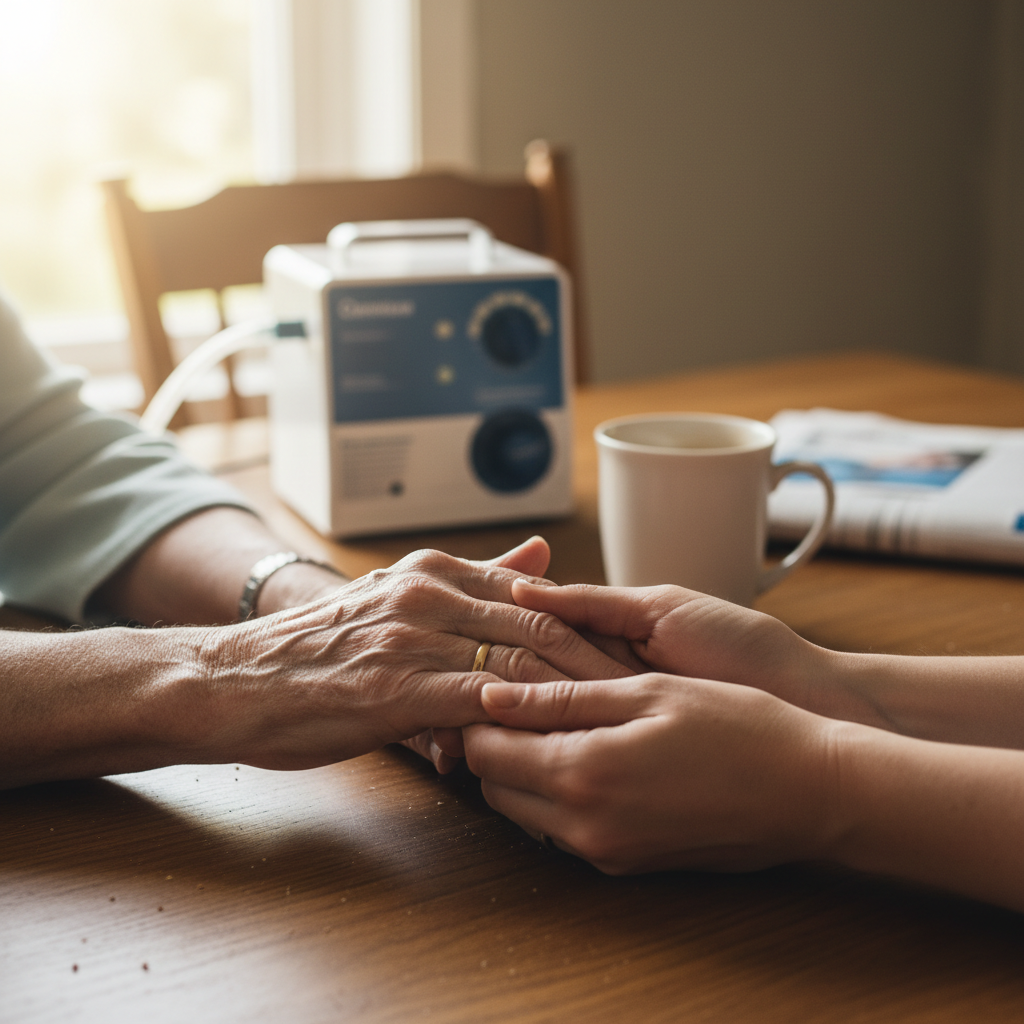
Two pairs of hands — one older with wrinkles, one younger — resting together on a wooden table in warm afternoon light

Some truths cause more harm than they heal.

Ready to begin?

The first lesson is free. Always.

No credit card. No commitment. Just forty minutes that might change how you show up tomorrow.

Start Your First Lesson Free

CEU credits available · All levels welcome

A question caregivers ask at 2 a.m.

What do I do when she gets angry — at me?

She accuses you of stealing her purse. She calls you a liar. She tells you she wants to go home, and you are standing in the house where she's lived for forty years. She hits. She screams. She says she hates you.

This is not about you. We know you know that. But knowing it and feeling it are different things, and you are allowed to feel hurt even when you understand the neurological reason.

Recall's module on behavioral responses teaches the DICE approach — Describe, Investigate, Create, Evaluate — and gives you specific scripts for the most common flash-points. More importantly, it gives you permission to feel what you feel and then return to the work.

Her anger is not a verdict on your care. It's a symptom looking for a safe place to land.

A question caregivers ask at 2 a.m.

How do I take care of myself while I'm taking care of her?

This is the question caregivers ask last, if they ask it at all. It feels selfish. It feels like a distraction from the real work. It is neither.

Caregiver burnout is not a personal failure. It is a predictable outcome of a role that asks everything and acknowledges almost nothing. The grief of caring for someone with dementia is called ambiguous loss — you are mourning someone who is still alive, and there is no funeral, no casserole, no socially recognized container for that grief.

The final module in Recall is devoted entirely to you. Not as a nice-to-have, but as a clinical necessity. A caregiver who is depleted cannot provide what a person with dementia needs — which is calm, consistent, emotionally present care. Your wellbeing is part of her care.

Your wellbeing is not separate from her care. It is part of it.

Person sitting peacefully by a window with morning light, holding a warm cup of tea in a quiet moment of rest

Rest is not abandonment. It's sustainability.

Six modules. Real moments. Something you can use tomorrow.

Each module is built around a specific scenario — not a theory. You will finish every lesson with a technique you can use in the next interaction.

01

Entering Their Reality

The foundational shift — from correction to connection.

02

Redirecting Without Dismissing

How to move someone through distress without invalidating it.

03

The Same Question, Again

Techniques for answering repetitive questions with genuine warmth.

04

When Behavior Becomes Behavior

Understanding agitation, accusation, and sundowning.

05

The Ethics of Therapeutic Fibbing

When honesty helps and when it harms — and how to decide.

06

Taking Care of the Caregiver

Ambiguous grief, burnout prevention, and sustainable presence.

From people who've been where you are.

I used to dread going in on Sundays. Now I actually look forward to it. Something in how I carry myself changed.

MT

Marcus T.

Home Health Aide · 4 years experience

We got CEU credits AND our whole team changed how they approach sundowning. That's rare.

PV

Priya Venkataraman

Activity Director, Sunrise Memory Care · Denver

Dad called me by his brother's name for six months. After Recall, I stopped correcting him and started listening. We have real conversations now.

JO

James O.

Son & Primary Caregiver · Atlanta

Hands held together in warmth

Begin today

You already love them well.
Now learn to love them differently.

The first lesson is free. No card required. Just you, forty minutes, and something that might change tomorrow.